Circular economy in the process industry: where the loops actually close
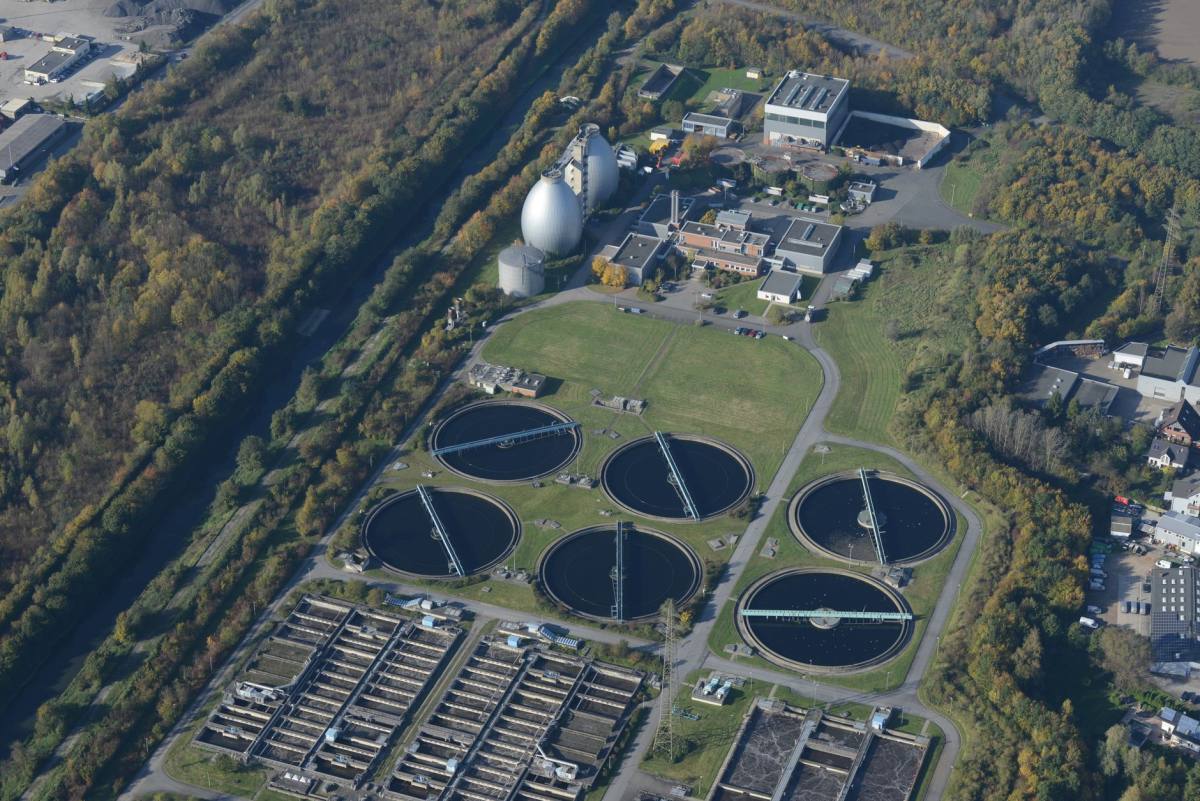
In a process plant a loop closes when the returning stream is fit for the duty it re-enters, not when it is clean in the abstract. That makes circularity a separation problem and a contaminant-balance problem before it is a policy one. Water, heat and by-product loops close first, and the cheapest loop to close is nearly always one you have already made smaller.
What circularity asks of a plant
The Ellen MacArthur Foundation describes the circular economy as a system where materials never become waste and nature is regenerated, resting on three principles: eliminate waste and pollution, circulate products and materials at their highest value, and regenerate nature. That describes an economy, not yet a work instruction for a plant.
The scale behind it is not in dispute. The UN Environment Programme’s Global Resources Outlook 2024 records that extraction of the earth’s natural resources tripled in the past five decades, and that without concerted action, by 2060 resource extraction could rise by 60 per cent from 2020 levels. Circle Economy’s Circularity Gap Reporting Initiative puts global circularity at 6.9 per cent as of 2026, against its own stated aim of 17 per cent by 2032.
Translated into a plant, those numbers become two questions with units attached: how much raw material, water and fuel enters per tonne of saleable product, and how much leaves as something other than product. A circularity project that cannot answer both from measured data is a slogan with a capital cost attached.
Make the stream smaller before you try to close it
The cheapest stream to recover is the one never generated, and process selection usually moves more tonnage than a recovery train bolted on afterwards.
The Central Pollution Control Board’s Charter for Zero Liquid Discharge in Molasses Based Distilleries is a useful worked example, because it publishes both ends of the range. The charter reports total fresh water consumption in Indian molasses distilleries of 10 to 20 litres per litre of alcohol produced, and records a norm of 15 litres per litre without naming the instrument that sets it. Its own technology comparison shows where that spread comes from: batch fermentation followed by atmospheric distillation runs at about 20 kL of fresh water and 15 kL of spent wash per kL of alcohol, while Biostill continuous fermentation with multipressure distillation runs at 12 and 8.0 respectively. On the fermentation step alone, spent wash falls from 14 to 15 litres per litre of alcohol in batch operation to 6 to 7 litres with continuous fermentation and weak beer recycle.
None of that is a treatment plant. It is unit selection, and between those two configurations it cuts fresh water by two fifths and spent wash by nearly half, taking the evaporator duty and the salt load down with them. Sizing a recovery train against the untouched stream is a common way to make a sound circularity case look uneconomic.
A loop closes at a specification, not at a percentage
“Ninety per cent recovery” is not a design basis. The useful question is what quality each returning stream has to meet for the duty it re-enters, and the regulator has written one such specification down.
CPCB’s Charter for Water Recycling and Pollution Prevention in Pulp and Paper Industries, issued in June 2024, sets out what a wastepaper-based mill has to show to justify a zero liquid discharge claim. Water recycled in a closed loop must have BOD below 2,000 mg/L, COD below 4,000 mg/L and TSS below 400 mg/L; recycling is permitted only after the secondary biological or tertiary stage, and that stage must achieve at least an 80 per cent reduction in BOD and TSS. Average daily fresh water consumption is capped at 2.5 kL per tonne of paper for mills without a power turbine and 3.0 kL per tonne for mills with one.
Those limits sit far above drinking water, and deliberately so. They are the regulatory maxima a mill must stay inside to call its loop closed, not a target for purity. The same logic runs through any plant. Cooling tower make-up, boiler feed, equipment washing and process make-up each have a different tolerance for hardness, silica, chloride and organic load, and treating every reuse stream to the strictest of them is the usual reason a recycling scheme costs more than the water it saves.
What a closed loop concentrates
Every recycle concentrates whatever the loop does not remove. Non-volatile species such as dissolved salts, silica, hardness and refractory COD leave only with the product, in a solid phase, or in a purge. At steady state the concentration the loop settles at is fixed by the ratio of what enters to what those exits carry away, so closing a loop without deciding its purge does not remove the accumulation, it only moves it into the equipment: scale on evaporator tubes, chloride pitting in stainless steel, biology in the cooling circuit, colour and salt building up in the process water.
This is why the pulp and paper charter asks a mill claiming zero liquid discharge for a daily record of TDS and COD in the backwater, a water balance showing its short and long recirculation loops, and a monthly compliance report carrying TDS and daily fresh water consumption. It also rules that land application of treated effluent does not count as zero liquid discharge, which closes the oldest way of pretending a loop is shut when it is only long.
What this means for your plant
- Start from measurement, not from a target. Metered fresh water at every intake and use point, and metered effluent at every generation point, is what the CPCB charter asks for and it is also the only basis on which a recovery scheme can be sized.
- Test the process change before the treatment plant. A change in fermentation, distillation or washing regime that halves a stream halves everything downstream of it, permanently and usually at lower capital cost.
- Write a specification per duty, not one for the site. Cooling make-up, boiler feed and process water are different problems, and a cascade that sends the poorest acceptable quality to the least demanding user is what makes reuse pay.
- Decide the purge at the same time as the loop. If nothing leaves, something accumulates, and the component that accumulates fastest sets the cycle limit rather than the water balance.
- Ask what the residue becomes. A concentrate or a salt with no route out is a solid waste problem bought with a liquid waste budget.
We design for the plant that exists, so the first question is usually which stream rather than which technology. Where the answer is a review of an operating plant, a stream that will not meet consent, or the operating cost a reuse scheme commits you to, that is water and process consulting work. Where it needs equipment that does not exist off the shelf, design, machining and fabrication sit together instead of passing between companies.
If you are weighing any of this for an operating plant, tell us what the stream is doing and we will tell you what we would measure first.
Sources
- Ellen MacArthur Foundation, What is a circular economy – overview
- Circle Economy, Circularity Gap Reporting Initiative
- UN Environment Programme and International Resource Panel, Global Resources Outlook 2024
- Central Pollution Control Board, Charter for Zero Liquid Discharge (ZLD) in Molasses Based Distilleries, PDF
- Central Pollution Control Board, Charter for Water Recycling and Pollution Prevention in Pulp and Paper Industries, Charter 3.0, June 2024, PDF