Sustainable process engineering starts with the plant you already have
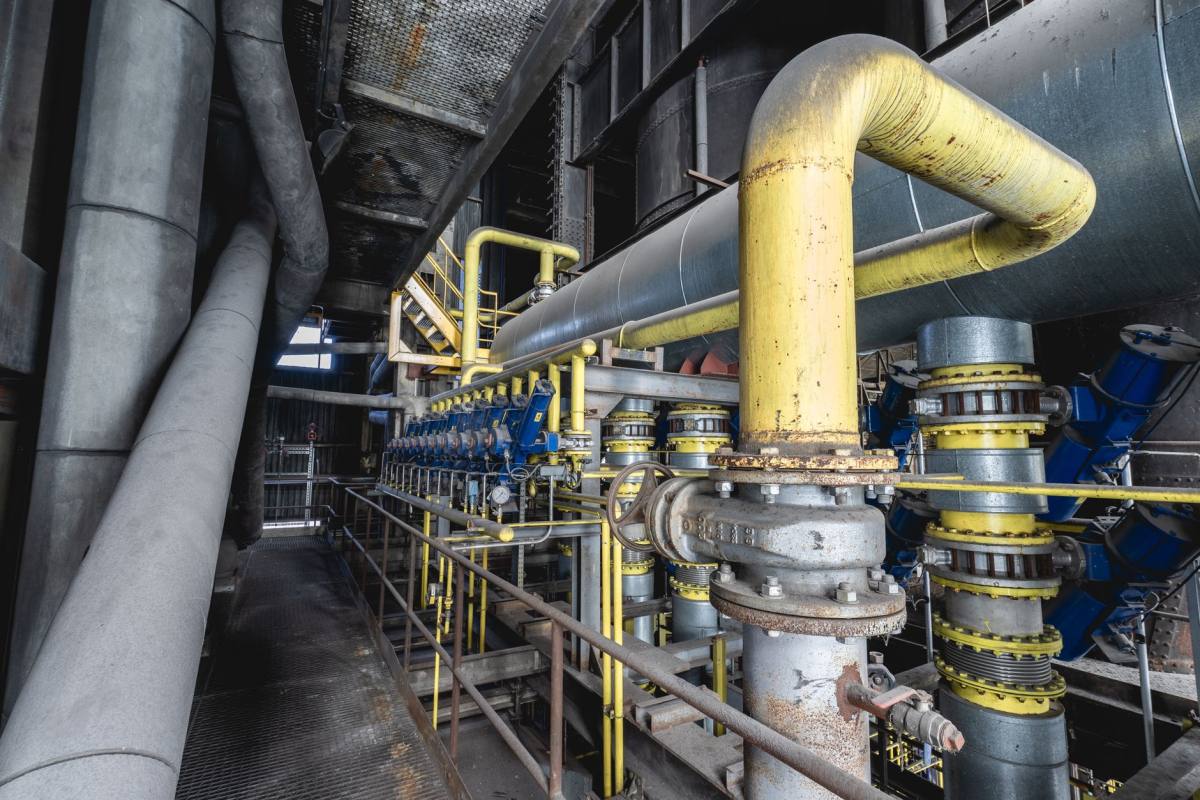
Most industrial energy and water is consumed by plants that are already built, already running and unable to stop. Sustainable process engineering is therefore mostly retrofit work: find where energy and water are actually lost, set a target the process is thermodynamically capable of reaching, and change the smallest number of units that gets you there.
Where industry’s energy and water actually go
The International Energy Agency’s 2025 commentary on industrial energy management puts industry at around 170 EJ of final energy consumption, roughly 39 per cent of the world total, and reports that global energy intensity improved by only about 1 per cent in 2024, around half the rate achieved in the previous decade. It attributes much of that slowdown to industry, whose energy intensity has not improved while its demand has grown by almost 2 per cent a year.
The same picture holds for water. The IEA’s companion commentary on integrated energy and water management describes industry as the second largest user of fresh water after agriculture, taking just under 20 per cent of fresh water withdrawals, and cites analysis of United States manufacturing finding that just under half of all the energy used on site is lost.
That last figure is the case for retrofit engineering, and a warning about where losses hide: flue gas, cooling water, uninsulated surfaces, throttled control valves, leaks, and the gap between the load a plant was designed for and the load that arrives.
Measure first, and use the denominator you already have
Energy management is the unglamorous half of this, and the half with published evidence behind it. The energy management commentary’s review of more than 300 case studies across 40 countries found an average 11 per cent energy saving within the first years of implementation, with a growing number of companies reporting 30 per cent or more, many of them from low-cost or no-cost measures. Its Indian example is a textile company that cut energy demand by more than 30 per cent in the first year, with a payback of less than a year. Uptake is rising with policy rather than with persuasion: new ISO 50001 certifications went from 450 in 30 countries in 2011 to nearly 25,000 in more than 100 countries in 2023.
An Indian plant often has the denominator written for it already. The Bureau of Energy Efficiency, set up on 1 March 2002 under the Energy Conservation Act, 2001, runs the Perform, Achieve and Trade scheme for energy-intensive industry. BEE’s site reports, as of 2025, that the scheme covers 1,333 energy-intensive industries, about 55 per cent of total industrial energy consumption, and cumulative savings of 25.78 million tonnes of oil equivalent. If your plant sits inside that 55 per cent, the argument about measuring has been settled elsewhere.
Targets that come from the process, not from a percentage
Kemp’s guide to pinch analysis and process integration makes the point that a target of ten per cent a year is arbitrary: it is easy on a badly run plant and impossible on a well-run one, which is a strange way to allocate capital.
Pinch analysis replaces it with a target the process itself sets. The guide opens with a specialty chemicals front end that used six heat transfer units and needed 1,722 kW of heating and 654 kW of cooling. Targeting first, then designing the network to the target, produced a flowsheet with four units, 1,068 kW of heating and no external cooling at all. Those are utility duties for one flowsheet, not a general rule. What is general is the trade the method makes explicit: the guide’s own worked exercise fixes a minimum approach temperature of 10 degrees Celsius between hot and cold streams, and a smaller approach recovers more heat while buying more exchanger area.
The same guide reports the industrial record. ICI found energy savings averaging 30 per cent on processes previously thought to be optimised, and BASF completed over 150 projects for site-wide savings of over 25 per cent from retrofits at Ludwigshafen. The value of a thermodynamic target is knowing, before spending anything, whether the design you have is nearly finished or barely started.
Water and energy are one balance
Treating water and energy as separate budgets keeps both of them high. The energy and water commentary puts the global energy sector’s fresh water withdrawal at around 0.6 billion cubic metres per exajoule of energy demand. That is a sector average dominated by power station cooling, not a figure for any one plant, but the direction holds: every unit of energy not bought is, somewhere upstream, water not withdrawn. It works the other way too. Electricity is typically 25 to 40 per cent of a water treatment plant’s operating expense, and ultrapure water costs four to eighteen times more energy to make than drinking water, so a reuse stream specified above its duty is paid for in kilowatt hours for the life of the plant. The same commentary reports water audits delivering savings of 10 to 50 per cent at industrial sites, with up to 20 per cent more on the cost of energy and water treatment chemicals.
A single unit change can move both balances. CPCB’s charter for zero liquid discharge in molasses-based distilleries compares atmospheric distillation, at 3.5 kg of steam per litre of rectified spirit and 97 to 98 per cent distillation efficiency, with multipressure distillation at 2.2 kg per litre and 98.5 per cent. The same change reduces spent wash generation, so the steam saving and the effluent saving arrive together, from one decision about a column.
What this means for your plant
- Instrument before you invest. Metered steam, power, fuel and water by section turns an opinion about losses into a balance.
- Ask what the process is capable of before you ask what the vendor offers. A thermodynamic target tells you whether a proposal captures most of the available saving or a tenth of it.
- Treat the load that arrives, not the load on paper. Plants designed for a nameplate they never see spend their lives at part load, where fans, pumps and columns rarely sit near their best operating point.
- Look for changes that move two balances at once. Column configuration, wash regime and reuse cascades usually affect steam, water and effluent together.
- Count the measures that cost nothing first. Many of the larger savings in the IEA’s case studies came from low-cost or no-cost measures rather than from new equipment.
- Keep the measurement after the project. The same case studies show companies still improving twelve years after putting an energy management system in place.
We size before we specify, so on a retrofit the mass and energy balance comes before any equipment list. A review of an operating plant, a stream that will not meet consent, or a feasibility and budgetary cost before commitment is process and environmental consulting rather than a proposal.
If you have a plant that cannot stop and a number that has to come down, tell us what it is doing now and we will tell you what we would measure first.
Sources
- International Energy Agency, Industrial facilities could save billions by implementing energy management, commentary, 1 July 2025
- International Energy Agency, Integrated energy and water management will boost savings in industry, commentary, 4 November 2025
- Ian C. Kemp, Pinch Analysis and Process Integration, chapter 1, publisher sample chapter, PDF
- Bureau of Energy Efficiency, Ministry of Power, Perform, Achieve and Trade
- Central Pollution Control Board, Charter for Zero Liquid Discharge (ZLD) in Molasses Based Distilleries, PDF