The hydrogen economy is a water and process plant problem first
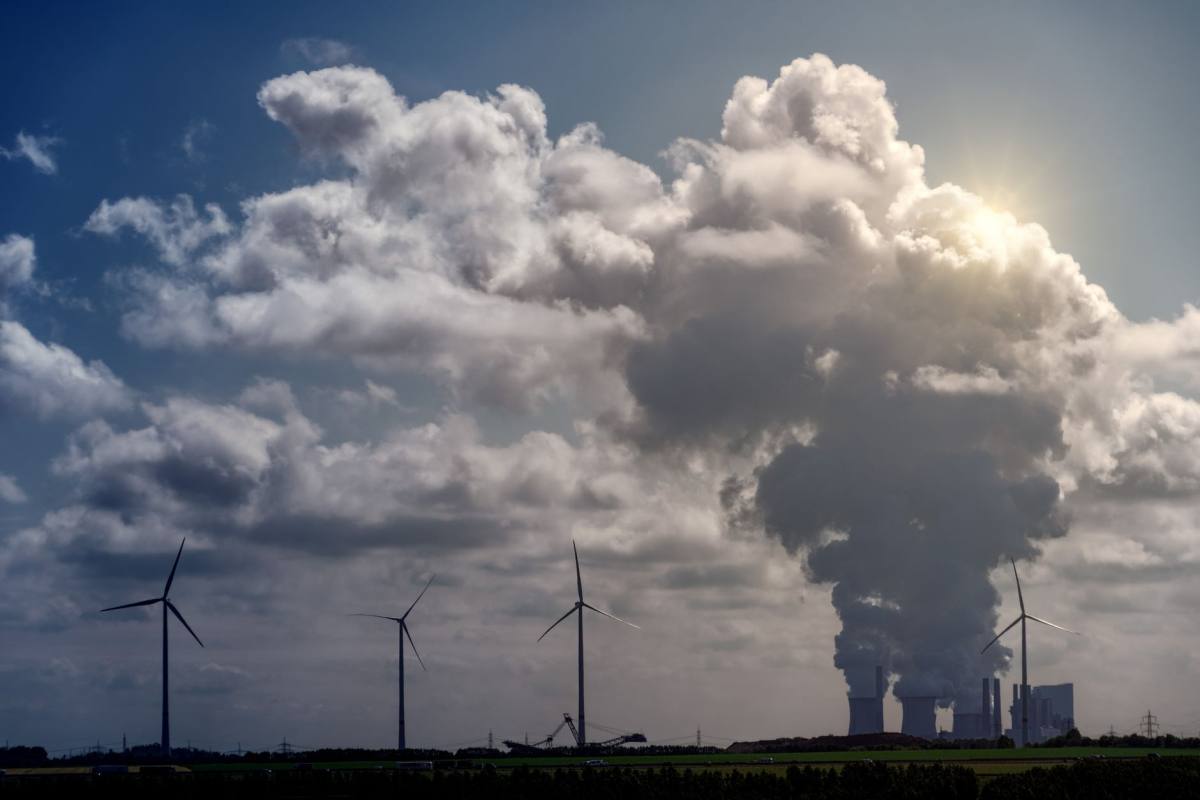
Hydrogen is already a large industrial business, and almost none of it comes from water. Scaling the electrolytic part is limited less often by the stack than by what surrounds it: firm electricity, cooling, feed water purified to a specification, a reject stream to place, and a plot to hold it all. Those are process plant questions.
What the hydrogen business actually is today
The IEA’s 2019 report The Future of Hydrogen put annual dedicated hydrogen production at around 70 million tonnes, about three quarters of it from natural gas, with less than 0.1 per cent from water electrolysis. It also makes the scale of substitution concrete: producing all of today’s dedicated output from electricity would need 3,600 TWh, more than the total annual electricity generation of the European Union.
Five years later the balance had barely moved. The IEA’s Global Hydrogen Review 2024 reports global hydrogen demand of 97 Mt in 2023, up 2.5 per cent on 2022, still concentrated in refining and chemicals and still met principally by hydrogen from unabated fossil fuels. Low-emissions hydrogen production was under 1 Mt in that year.
So this is not a new industry waiting to be built from nothing. It is an existing one whose supply route is changing, and the tonnages already sit in refineries and in ammonia and methanol plants.
Announcements are not plants
The gap between the announced pipeline and the committed one is the number worth watching. The Global Hydrogen Review 2024 counts announced low-emissions projects reaching 49 million tonnes a year by 2030, and almost 520 GW of announced electrolysis. Production that had taken a final investment decision was 3.4 million tonnes a year, with 0.7 operating. Delivering the full pipeline, the IEA notes, would need compound annual growth of over 90 per cent from 2024 to 2030, faster than solar photovoltaics managed in its quickest phase.
Cost is the reason, and the IEA expects it to fall rather than vanish: in its Net Zero Emissions by 2050 scenario, low-emissions hydrogen from renewable electricity reaches USD 2 to 9 per kilogram by 2030, about half of today’s value, with the gap against unabated fossil-based production narrowing to USD 1 to 3 per kilogram. It attributes the delays and cancellations to unclear demand signals, financing hurdles, delays to incentives, regulatory uncertainty, licensing and permitting, and operational problems. The electrolyser itself is not on that list.
The water question is mostly a cooling question
The United States Department of Energy’s Program Record 25003 on water use in hydrogen production, dated May 2026, estimates direct, on-site water consumption per kilogram of hydrogen for five routes, separately from the upstream water behind the electricity. For electrolysis it gives 8 US gallons per kilogram in the Unlimited case built around cooling towers and 2.4 gallons in the Minimal case built around dry cooling; in that same Unlimited case, steam methane reforming with carbon capture is 6.4 gallons and reforming without capture 2.1. That is about 30, 9, 24 and 8 litres, converted from the record’s gallons.
That last number shows how much the boundary decides. The record allocates the water used to make export steam to the steam rather than to the hydrogen, and states that without that allocation total water consumption for reforming would be 4.2 gallons per kilogram, above its Minimal and Efficient electrolysis cases. Same plant, same water, different cut line.
Electrolysis splits water, so the stoichiometric demand is fixed and small. Everything above it is utilities.
The spread across the electrolysis cases is more than three to one, and the variable is cooling technology, not electrochemistry. The record’s direct water categories make that plain: purification, the reaction, vapour lost with the product gases, cooling evaporation, and cooling tower blowdown and drift. Its tower case assumes five cycles of concentration and 0.02 per cent drift.
What the purification leaves behind
Purification adds a second stream. For the electrolysis cases the record assumes reverse osmosis recovery of 85, 78 and 75 per cent for Minimal, Efficient and Unlimited respectively, and that polishing beyond reverse osmosis, such as ion exchange, consumes no further water. In the Unlimited case, which the record calls the most likely outcome for most production facilities, a quarter of the feed leaves as reject; in the Minimal case it is 15 per cent. Either way it needs somewhere to go.
The record also concludes that producing 10 million tonnes of hydrogen a year by any route it evaluated would need less than 2 per cent of total United States water consumption: reassuring nationally, irrelevant locally, because water is consumed at a plot boundary.
What India’s mission implies on the ground
India has set the target rather than the plant. The Cabinet decision on the National Green Hydrogen Mission lists among its likely outcomes by 2030 green hydrogen production capacity of at least 5 million metric tonnes a year, with about 125 GW of renewable energy capacity added alongside it. The Ministry of New and Renewable Energy puts the initial outlay at Rs 19,744 crore, including Rs 17,490 crore to 2029-30 for the SIGHT programme and its two incentives, for electrolyser manufacturing and for green hydrogen production.
Read that as a plant list rather than a policy. Capacity on that scale needs demineralised water made to a specification and held there, cooling sized for the stack’s waste heat, a route for reject and blowdown, and instrumentation a certifier will accept, since the mission also commits to a certification framework. Those are the unit operations an effluent plant already uses, specified more tightly.
What this means for your plant
- Size the utilities before the stack. Cooling and water treatment set the water consumption and much of the plot, and the published spread across cooling choices is more than three to one.
- Decide the cooling method as a trade, not a default. Dry cooling saves water but costs capital and loses performance on the hottest days, which are the days a solar-coupled plant runs hardest.
- Specify feed water by what the stack requires and prove it continuously. The conductivity meter belongs to the plant, not to the laboratory.
- Plan the reverse osmosis reject alongside the permeate. It is a quarter of the feed in the DOE record’s representative case and 15 per cent at its most efficient, and on an inland site that is a disposal problem before it is a water problem.
This starts as research and ends as equipment: characterise the raw water, establish at bench scale what the treatment train has to do, then design something that can be built and maintained. That route runs through applied research and laboratory validation to a specified plant; where the stream already exists and is awkward, it is process and environmental consulting instead.
If your hydrogen project’s water balance is still a placeholder, tell us what the raw water is and we will tell you what we would test first.
Sources
- International Energy Agency, The Future of Hydrogen, 2019
- International Energy Agency, Global Hydrogen Review 2024, executive summary
- United States Department of Energy, Program Record 25003, Water Use in Hydrogen Production, PDF
- Press Information Bureau, Cabinet approves National Green Hydrogen Mission, 2023
- Ministry of New and Renewable Energy, National Green Hydrogen Mission