Zero liquid discharge: when it pays, and when it does not
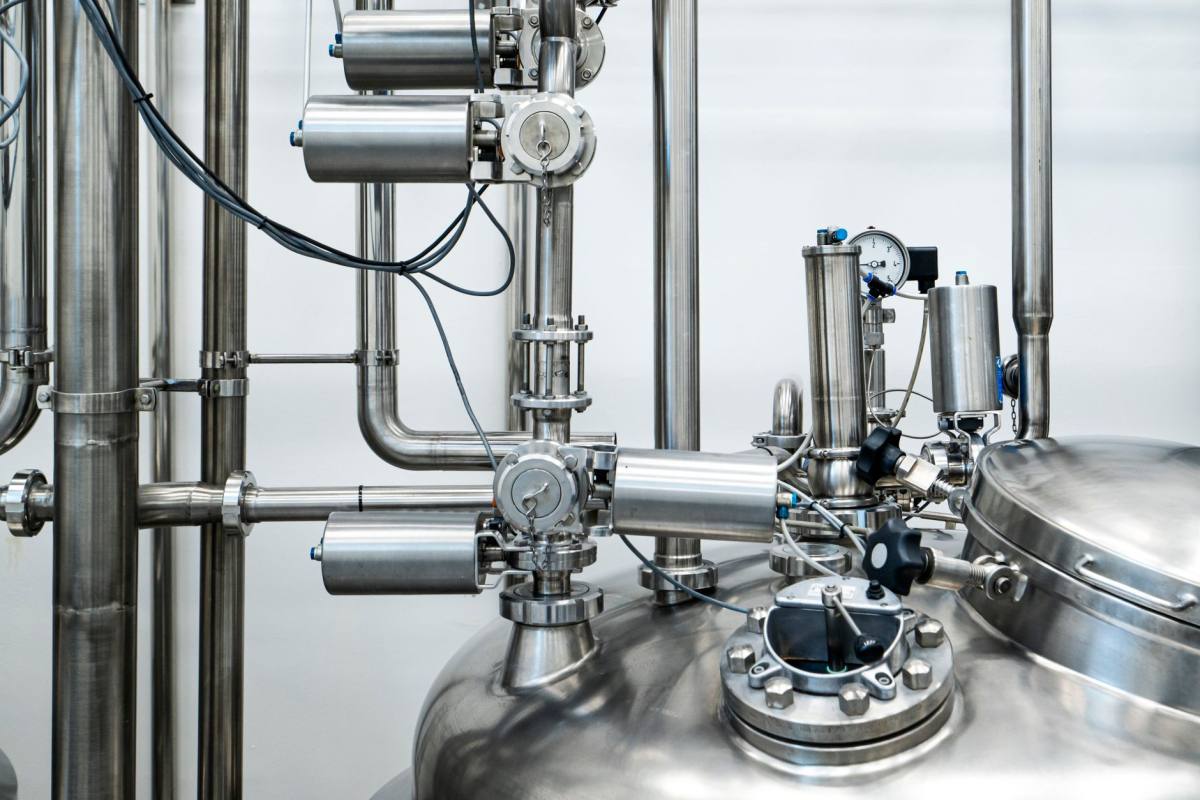
Zero liquid discharge pays when the alternative is a consent you cannot meet, a water quota, or a disposal route that has closed. It rarely pays as a general upgrade. Most of the cost sits in the last few per cent of water recovered, where evaporation and crystallisation take over from membranes, and that is where business cases go wrong.
What the regulator asked for, and what survived
Grönwall and Jonsson’s 2017 study in the Law, Environment and Development Journal traces how zero liquid discharge entered Indian law and how far it got. They record that the Central Pollution Control Board’s 2015 guidelines on the techno-economic feasibility of implementing it define the term as facilities enabling absolute recycling of the permeate and converting the dissolved solute into residue in solid form by concentration and thermal evaporation, recognised on two parameters: water consumed against water reused or recycled, and the solids recovered. Groundwater injection does not count, nor irrigation with the permeate.
The same study records that in February 2015 the board directed wet processing textile units in the nine Ganga basin states discharging more than 25,000 litres a day, 25 kLD, to have it working within sixteen months. The Ministry of Environment, Forest and Climate Change’s draft notification that year would have generalised it, naming reverse osmosis and multiple effect evaporators as imperative. What was gazetted a year later, the Environment (Protection) Fifth Amendment Rules, 2016, kept the numbers, COD 250 mg/L, BOD3 30 mg/L, inorganic total dissolved solids 2,100 mg/L, and left the obligation to build for zero discharge to the boards’ discretion.
The cost is in the last cubic metre
Tong and colleagues, reviewing brine management in Nature Reviews Clean Technology in 2025, give the number that decides most projects: citing industry data, the brine crystalliser processes only 12 per cent of the saline wastewater volume but carries over 40 per cent of the total treatment cost.
The energy runs the same way. The review puts mechanical vapour compression at 20 to 40 kWh of electricity to treat one cubic metre of brine, a gain output ratio of 10 to 20 at 65 per cent recovery, and the thermal crystalliser at 50 to 60 kWh per cubic metre. Capital follows: the review says vapour compression needs corrosion-resistant materials such as titanium alloy and stainless steel for hot, near-saturated brine, and that titanium alloy costs five to eight times more than brass, copper and nickel.
A figure without its boundary is not a figure
The review’s own energy table carries a warning worth repeating: read the values with caution, because some come from pilot plants and others from modelling, and because they move with salt type, starting concentration, recovery and optimisation. It separates electrical from thermal kilowatt-hours, and notes that thermal processes still draw electricity for circulation and vacuum the table does not count.
Denominators differ too. The United States Bureau of Reclamation’s 2009 brine-concentrate treatment and disposal options report states its boundary each time: its first part gives about 70 to 90 kWh per 1,000 gallons of brine concentrator feed, of which the vapour compressor is roughly 80 per cent, and its second about 250 kWh per 1,000 gallons of crystalliser feed. Converted, those are roughly 19 to 24 and 66 kWh per cubic metre, the first overlapping the review’s 20 to 40 range and the second not comparable with its crystalliser figure, which does not say what its cubic metre is of. Per cubic metre of plant inflow, of feed to one unit, and of recovered product are three different numbers for one plant. Fix that before comparing offers, then check the battery limit: pretreatment chemicals, the softening that keeps membranes alive, and the fuel behind the steam.
When it does not pay
What the last stage is worth depends on what it replaces. Tong and colleagues report that in the Marcellus basin, Pennsylvania, where produced water is trucked to Ohio for injection at USD 94 to 126 per cubic metre, a commercial zero liquid discharge train at USD 41 to 63 is cheaper; in the Eagle Ford region, Texas, where injection costs USD 2 to 4 plus USD 6 to 9 for transport, it is not. They conclude that the choice turns on the cost of a crystalliser or evaporation pond against local disposal: unless zero liquid discharge is enforced by regulation or wanted for reuse, minimal liquid discharge is often the better answer. They describe it as commonly targeting recovery of up to 95 per cent against nearly 100, with the residual brine still needing a home.
Grönwall and Jonsson record the same verdict from the plants: at the board’s February 2016 workshop in New Delhi most industrialists dismissed the technique on cost and on the energy it demands, and the Ministry of Textiles called the proposed standards too stringent for a largely unorganised processing sector of small and medium enterprises.
The cheapest zero is a smaller stream
The board’s own charter for water recycling in textile industries in the Ganga river basin is written the other way round, and is the more useful document. It benchmarks fresh water per kilogram of product and ratchets it: woven cotton from 120 litres per kilogram to 96 by its first-phase deadline of 31 December 2021 and 82 by the second on 31 December 2022, polyester from 60 to 48 to 41, a 20 per cent cut then 15. It then rules that effluent generation is calculated as 85 per cent of water consumed, so a litre saved at the machine is a litre that never reaches the evaporator. Only then does it reach for equipment: membranes returning usable water, the reject to a multiple effect evaporator.
Pushing the membrane stage does the same. Tong and colleagues report that, taking a power plant in Denver, Colorado as their example, a zero liquid discharge scheme incorporating closed-circuit reverse osmosis has the potential to cut the levelised cost of water by 67 per cent against a train relying on brine concentrator and crystalliser alone, mainly through 90 per cent less energy and 63 per cent less capital.
What this means for your plant
- Establish why you are doing it. A consent you cannot meet, a groundwater restriction or a closed disposal route makes the case; a sustainability target rarely survives the operating cost.
- Price the crystalliser separately. It handles a small fraction of the volume and, on the data above, over 40 per cent of the cost.
- Fix the denominator in every quotation, then ask whether minimal liquid discharge would do. If the residual brine has a legal home, it avoids the most expensive equipment on the site.
- Price the residue. A crystalliser hands you a salt that is solid waste unless a buyer was found first; near-saturated brine sets the metallurgy for everything it touches.
Sizing it is a measurement job before an equipment job, and where the answer needs a machine not on a catalogue page, design, machining and fabrication sit together.
If you are being asked to commit to zero liquid discharge, tell us what the stream is and we will say what we would measure.
Sources
- Jenny Grönwall and Anna C. Jonsson, Regulating Effluents From India’s Textile Sector: New Commands and Compliance Monitoring for Zero Liquid Discharge, Law, Environment and Development Journal 13/1, 2017, PDF
- Tong and others, Brine management with zero and minimal liquid discharge, Nature Reviews Clean Technology, 2025, public-access PDF
- United States Bureau of Reclamation, Brine-Concentrate Treatment and Disposal Options Report part 1, Southern California Regional Brine-Concentrate Management Study Phase I, October 2009, PDF
- United States Bureau of Reclamation, Brine-Concentrate Treatment and Disposal Options Report part 2, Southern California Regional Brine-Concentrate Management Study Phase I, October 2009, PDF
- Central Pollution Control Board, Charter for Water Recycling and Pollution Prevention in Textile Industries in Ganga River Basin, PDF